CREATOR GUIDE
AI Song Prompts: How to Match Vocal Style, Genre, and Mood to Your Lyrics
Your lyrics already contain clues about the voice, genre, energy, and arrangement they need. The strongest AI song prompts translate those clues into a clear musical direction instead of treating lyrics and production as separate decisions.

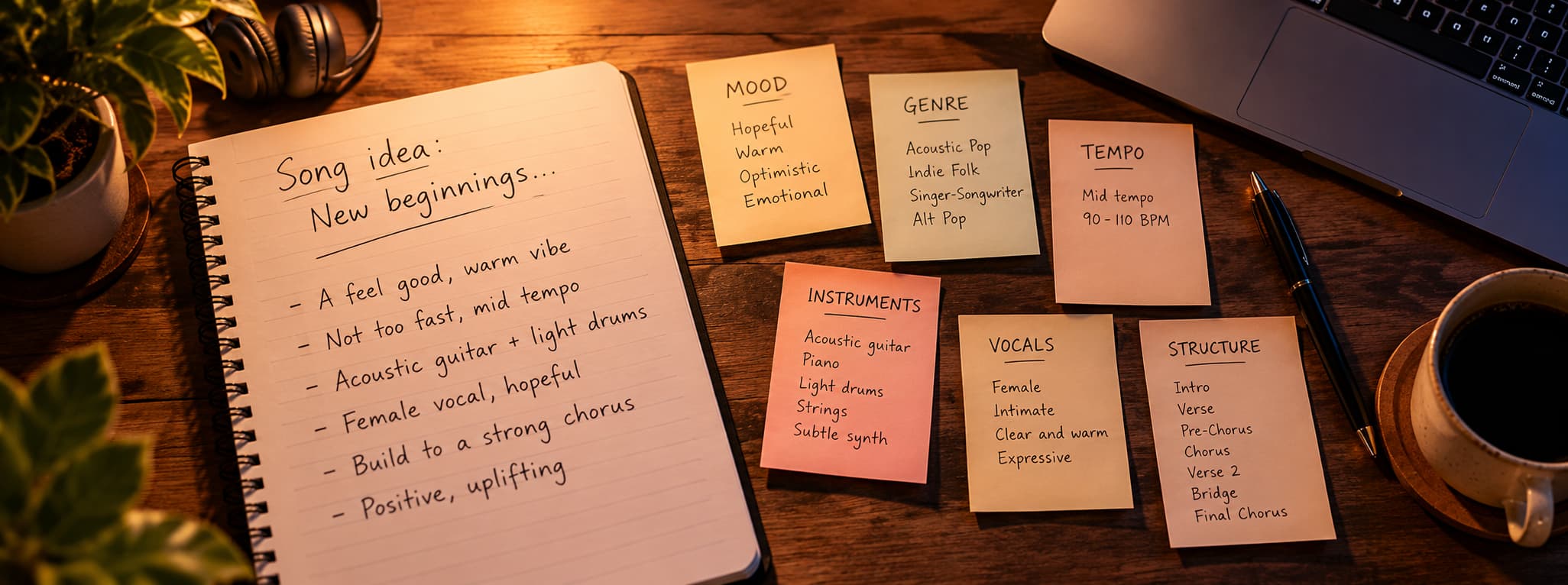
Start with the story inside the lyrics. Then choose a vocal delivery that fits the speaker, a genre that supports the message, and an emotional arc that changes across the song. Keep the prompt focused: story + genre + mood journey + vocal delivery + arrangement + section contrast.
A short, direct chorus might invite a brighter pop arrangement. A verse built from personal memories may work better with a quieter, conversational performance.
The challenge is not simply choosing a genre — it is making the music feel believable for the words.
For creators using SonoLabs.ai, a lyric-first workflow is a practical way to reduce guesswork. Instead of asking for an “emotional song,” explain who is speaking, what they feel, how the feeling changes, and how the performance should carry that change.
Start With the Story Inside Your Lyrics
Before choosing instruments or describing a singer, read the lyrics aloud and identify three things: the speaker, the listener, and the central emotional change.
“I left the porch light burning through the rain.”
That line could suggest patient hope, unresolved grief, or frustration. Each interpretation leads to a different vocal performance and arrangement.
Write a one-sentence emotional summary before you build the prompt.
“Someone is waiting for a loved one while slowly accepting that they may not return.”
Choose a Vocal Style That Fits the Speaker
A useful vocal prompt describes delivery, not just identity. Labels such as “female singer” or “male singer” leave phrasing, intensity, and expression largely undefined.
| Dimension | Examples | What it controls |
|---|---|---|
| Tone | airy, warm, rough, rounded, bright, smooth | The vocal character |
| Delivery | conversational, sustained, rhythmic, restrained, forceful | How phrases are performed |
| Expression | hesitant, affectionate, frustrated, assured, vulnerable | The emotional interpretation |
“A gentle lead vocal with measured phrases and a slightly uncertain opening.”
“A firm, open delivery with strong emphasis on the chorus hook.”
Describe the sound directly instead of naming a famous performer. Keep the direction consistent enough that the verse and chorus still feel like the same narrator.
Choose a Genre That Supports the Lyrics
Genre shapes rhythm, harmony, instrumentation, and performance expectations. Treat it as a storytelling choice rather than a style label added at the end.
| Lyric focus | Genre to explore | Performance direction |
|---|---|---|
| Personal reflection | Acoustic folk | Understated, speech-like phrasing |
| Romantic anticipation | Contemporary R&B | Smooth delivery with rhythmic space |
| Renewed confidence | Dance-pop | Crisp phrasing and a memorable hook |
| Unresolved tension | Alternative rock | Restrained verses with rising intensity |
Begin with one main genre. Add a second influence only when it has a clear job — for example, electronic percussion underneath an otherwise acoustic arrangement.
Describe Mood as an Emotional Journey
A lyric rarely stays emotionally still. A first verse might introduce doubt, while the final chorus arrives at acceptance. Your prompt should describe that movement.
“Begin with a guarded, reflective feeling. Introduce warmth in the second verse, then let the final chorus feel quietly resolved.”
This gives each section a role and helps avoid a performance that delivers every line with the same intensity.
Keep emotion separate from energy. Grief can feel intense without fast drums. Optimism can feel calm rather than explosive. Choose the emotional direction first, then decide how much movement the arrangement needs.
Check Whether the Lyrics Have Room to Sing
Even the right vocal style can struggle with crowded lines. Read each line at the pace you imagine for the song and notice where you naturally pause.
“I kept checking every window, wondering whether you were coming home tonight.”
“I watched the window after nine.
Would your headlights cross the blinds?”
Shorter lines can create clearer phrasing, stronger hooks, and more room for the singer to breathe.
Keep production instructions separate from the lyrics wherever the interface allows, and use section labels when supported.
See How to Turn Your Lyrics Into an AI Song With Vocals for more on structuring lyrics and directing the vocal.
Build a Focused AI Song Prompt
“An indie folk song about waiting for someone who may never return. Begin with uncertainty and move toward acceptance. Use a clear, restrained lead vocal over plucked acoustic guitar and occasional piano notes. Keep the verses sparse. Let the chorus open gently, with a brief instrumental response after the central lyric.”
This prompt works because each instruction has a purpose. The genre supports the story, the vocal delivery fits the speaker, and the arrangement changes when the lyric needs more emotional space.
See How to Write an AI Music Prompt for more ways to shape your song brief.
Try Three Musical Directions for the Same Lyrics
Use one unchanged hook so you can hear how the musical setting changes its meaning:
“I’m learning how to leave the light on for myself.”
Reflective Folk
“Reflective folk with a patient, lightly textured vocal. Use acoustic guitar and low cello accompaniment. Deliver the hook as a private realization, with a pause before the final words.”
Bright Synth-Pop
“Bright synth-pop with a steady dance rhythm and a confident lead. Keep the verse melody contained, then give the hook a buoyant lift. Suggest celebration through rhythm while preserving the lyric’s tenderness.”
Spacious Contemporary R&B
“Spacious contemporary R&B with electric piano, rounded bass, and an unhurried groove. Use a smooth lead with minimal embellishment. Leave silence around the hook so its message carries.”
Compare which interpretation makes the lyric feel most believable. The goal is not to find the most impressive production; it is to find the version that reveals the words most clearly.
Listen, Revise, and Finish
Evaluate the opening verse and chorus first. Can you understand the words? Does the delivery match the speaker? Does the hook receive the right emphasis?
- If the vocal feels theatrical, request a more understated delivery before changing the genre.
- If the chorus feels flat, describe what should change emotionally or harmonically at that point.
- If words feel rushed, shorten crowded lines or slow the phrasing.
- If the voice changes character between sections, simplify or reinforce the performance direction.
- If distorted words or unstable notes remain, generate another version rather than trying to repair them in mastering.
Make one major change at a time so you can hear what improved the result. Overall balance, polish, and mastering belong later in the workflow.
For vocal troubleshooting, read Why Do AI Vocals Sound Unnatural?. Once the performance and mix are ready, see AI Mastering for Streaming.
Frequently Asked Questions
What should I include in an AI song prompt?
Include the lyric’s central story, one main genre, vocal delivery, emotional progression, a few defining instruments, and how the verse and chorus should differ.
How do I choose a vocal style for my lyrics?
Read the words aloud and identify the speaker’s attitude. Then describe how that person should sing — for example, conversationally, gently, urgently, confidently, or with restraint.
Can the same lyrics work in different genres?
Yes. The same lyric can feel vulnerable, hopeful, defiant, or celebratory depending on the genre and performance. Keep the words unchanged when comparing styles so you can hear what the music changes.
How do I make an AI-generated chorus feel more emotional?
Describe what changes at the chorus. You might ask for stronger conviction, wider harmonies, more open instrumentation, or a clearer melodic lift. More emotion does not always mean louder singing.
Why does the generated vocal sound rushed?
The lyric may contain too many syllables for the phrase. Shorten crowded lines, add pauses, or request a more spacious tempo and delivery.
Should I name a singer or artist in an AI song prompt?
It is better to describe the vocal and production qualities you want directly — such as airy, warm, restrained, rhythmic, intimate, or forceful — rather than relying on a specific performer’s name.
Can mastering fix the wrong vocal mood?
No. Mastering can improve final presentation, but it cannot reliably change the emotional interpretation of a vocal. Revise the prompt and regenerate when the performance itself is wrong.
Let the Lyrics Lead the Sound
The best AI song prompts do not treat lyrics, vocals, genre, and mood as separate boxes. They connect them into one creative direction.
Start with what the lyric means. Decide who is speaking, how they should perform it, which genre supports the story, and where the emotion changes. Then generate, listen, and refine the part that feels least believable.
Create with SonoLabs.ai
Bring your lyrics into SonoLabs.ai, define the vocal and musical direction, and turn the words into a song that feels connected from the first verse to the final chorus.
Create Your Song