CREATOR GUIDE
Why Do AI Vocals
Sound Unnatural?
Prompt and Production Fixes to Try
A song can have a strong melody and the right mood, yet the vocals still feel off. Learn how to identify what is going wrong — and whether to fix it in your prompt, lyrics, generation, mix, or master.
AI vocals usually feel unnatural because something is wrong with phrasing, pronunciation, vocal consistency, arrangement space, or processing.
Fix malformed words and broken phrasing at the generation stage. Use mixing for balance, clarity, and effects. Master only after the vocal performance is already working.
Why AI Vocals Can Sound Robotic or Unnatural
A word may blur into the next one. A held note can become metallic. The singer may suddenly change character between the verse and chorus, or every line may arrive with the same emotional weight.
The useful question is not simply “Why does this sound like AI?” It is: “What exactly sounds wrong, and where should I fix it?”
8 Common Reasons AI Vocals Sound Unnatural
Identifying the source of the problem helps you choose the right fix.
Unclear vocal role
The prompt does not define what the vocal should do in the song.
Vague performance direction
Tone, delivery, pacing, and energy are not clearly described.
Difficult lyrics
Long sentences or crowded words are difficult to sing naturally.
Arrangement mismatch
The vocal energy does not fit the surrounding instruments.
Inconsistent sections
Verse and chorus can sound like different vocal performances.
Over-processing
Too much reverb, compression, or other processing hides the performance.
Volume and balance
The performance is good, but the vocal does not sit correctly in the mix.
Generation artifacts
Words, sustained notes, or vocal textures contain audible generation errors.
Generation Problem or Production Problem?
| What you hear | Most likely stage | First thing to try |
|---|---|---|
| Malformed or mispronounced word | Generation / lyrics | Rewrite the phrase or regenerate |
| Awkward pause or rushed line | Lyrics / phrasing | Shorten or rebalance the line |
| Voice changes between sections | Generation / prompt | Use a more consistent vocal direction |
| Vocal disappears under instruments | Arrangement / mix | Create more space around the lead vocal |
| Harsh or muddy vocal | Mix | Try restrained de-essing or EQ |
| Track lacks final balance or level | Mastering | Master after the vocal is clean |
1. Give the Vocal a Clear Role
Before describing the singer, decide what the vocal needs to do. Is it carrying the story, delivering a memorable hook, or adding atmosphere?
2. Describe the Vocal Performance
Describe tone, delivery, pacing, clarity and how the performance should develop rather than simply asking for “realistic singing.”
“Emotional pop song with realistic singing.”
Too much of the performance is left undefined.
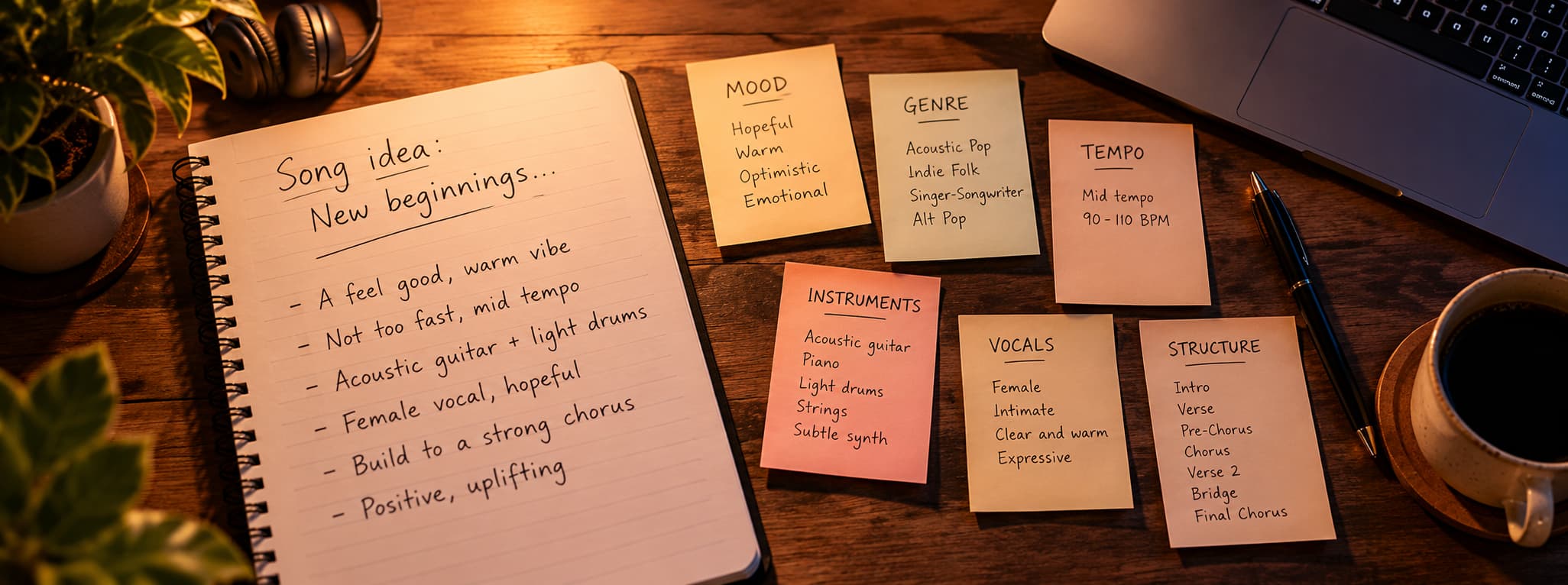
“Reflective acoustic-pop song with a warm lead vocal, conversational verses, clear pronunciation, and gentle pauses between phrases. Build to a fuller chorus while keeping the singing relaxed and controlled.”
3. Rewrite Lyrics That Are Difficult to Sing
Lyrics that read well do not always sing comfortably. Long sentences, uneven syllable counts and crowded consonants can create rushed or awkward delivery.
“I am remembering every single moment that we shared together.”Long and crowded
“I still remember nights with you.”More room for melody and expression
For a full walkthrough of structure and singability, see our guide to turning your lyrics into an AI song with vocals.
4. Match Vocal Energy to the Arrangement
A vocal can feel unnatural even when the generated voice itself is acceptable. Sometimes the problem is the relationship between the singer and the backing track.
“Intimate verse with soft piano and light percussion. Add bass and wider instrumentation in the chorus, with a modest lift in vocal intensity while keeping the lead clear and controlled.”
5. Compare Several Generations
AI generation varies from one attempt to the next. The same lyrics and prompt can produce a vocal that sounds natural in one version and strained in another, so judging a single result is rarely enough.
Generate a few versions and compare the same section of each—usually the first verse and the first chorus. Listen at a similar volume, and focus on the vocal rather than the overall production.
Note what the strongest version does differently. Is the phrasing more relaxed? Is the chorus lift more controlled? Those observations are often the most useful words to add back into your prompt.
6. Know When to Regenerate and When to Mix
Mixing can improve a good performance. It cannot reliably rebuild a malformed one.
Fix the performance
- Malformed or unintelligible word
- Fundamentally awkward phrasing
- Voice changes character
- Broken sustained note
Fix the presentation
- Vocal is too quiet
- Tone is slightly muddy or harsh
- Sibilance is distracting
- Too much reverb obscures words
7. Use Production to Improve Clarity
Once the performance itself works, production can help it sit naturally in the track. Small, careful adjustments usually help more than heavy processing.
Raise the vocal level where words get lost, and use gentle EQ to reduce muddiness or harshness. A restrained de-esser can tame sharp “s” sounds. Light compression can even out the performance, but too much makes it sound flat and processed.
Be careful with reverb and delay. They can add space, but they can also blur consonants and make an AI vocal sound more synthetic. If a word becomes hard to understand, reduce the effect before reaching for anything else.
8. Fix the Vocal Before Mastering
Mastering works on the finished stereo track. It can refine overall tone, loudness, and balance, but it treats the vocal as part of the whole mix rather than as a separate performance.
That means mastering cannot reliably fix a mispronounced word, a broken note, or a vocal that is buried under the instruments. If the master makes the vocal sound worse, return to the mix or generation stage rather than trying another master.
When the vocal is clean and well balanced, follow our guide to preparing your track for mastering.
A Simple Troubleshooting Workflow
Work from the source of the sound outward. Fix the performance first, then the balance, and leave final polish until last.
- ListenPlay the full track once
- PinpointNote what sounds wrong, and where
- DiagnoseGeneration, arrangement, or mix?
- RewriteAdjust the lyrics or vocal brief
- RegenerateCompare new versions
- MixBalance, EQ, and de-essing
- MasterFinal polish, last
If the performance itself is broken, return to the lyrics, prompt, or generation.
If the performance is good but does not sit correctly, move to editing and mixing.
If the mix already works and only needs final polish, move to mastering.
Create more natural, expressive vocals.
Turn your lyrics and ideas into complete AI-generated songs, then refine the result until the performance feels right.
Create AI MusicFrequently Asked Questions
How can I make AI vocals sound more natural?
Start with singable lyrics and a focused vocal brief. Describe tone, delivery, pacing, clarity, and how the energy should change. Compare several generations before applying production effects.
Why do AI singers mispronounce lyrics?
Dense syllables, unusual words, awkward phrasing, and generation variability can contribute. Simplify the affected line or regenerate it.
Can prompts make AI vocals sound less robotic?
They can help guide the performance. Specific directions such as conversational phrasing, restrained delivery, clear pronunciation, and controlled chorus lift are more useful than simply asking for realistic vocals.
Can mixing fix distorted AI vocals?
Mixing can reduce harshness, sibilance, muddiness, or poor balance, but it cannot reliably reconstruct malformed words or badly damaged notes.
Can mastering fix unnatural AI vocals?
Not reliably. Fix pronunciation, phrasing, artifacts, and vocal balance before mastering.
When should I regenerate instead of mixing?
Regenerate when words are malformed, the vocal identity changes unexpectedly, a note breaks, or phrasing feels fundamentally wrong. Mix when the performance itself is good but needs better balance or clarity.